A Class Brick
Traditional clay masonry.
- Benefit
- Strong, familiar and easy for conventional fixing/workmanship.
- Know this
- Heavier and generally less thermally insulating than AAC.
Lesson 2.7
they differ in weight, size accuracy, insulation, fixing and construction method.
All three can build good walls. They differ in weight, size accuracy, insulation, fixing and construction method.
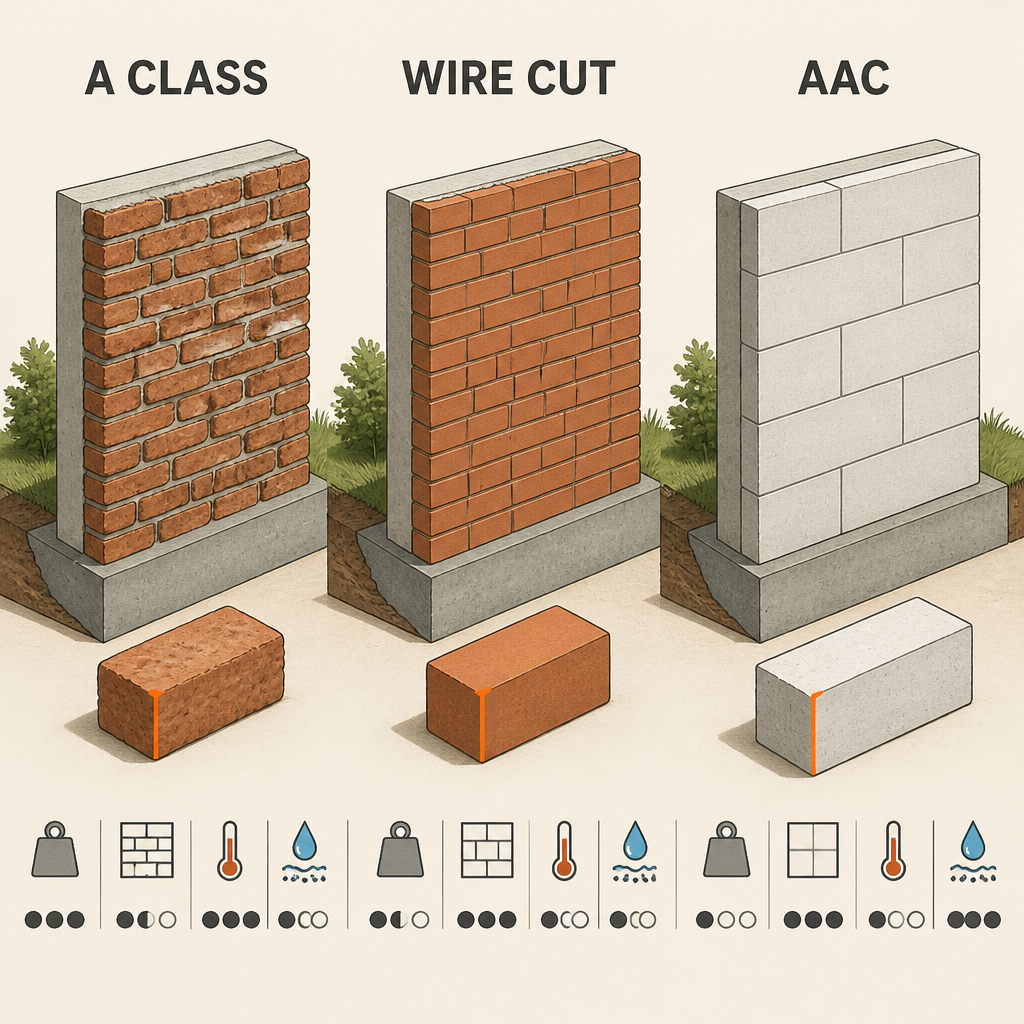
AAC is not simply a premium brick. Wire-cut is not simply a prettier brick. They are different materials with different strengths.
Conventional burnt-clay masonry. Familiar, robust and widely understood by masons.
Extruded clay brick with more regular geometry and cleaner edges.
Lightweight aerated concrete block. Larger, much lighter and better at thermal insulation than dense conventional masonry.
Choose according to wall use, structure, climate, fixings and the contractor's workmanship.
Traditional clay masonry.
More dimensionally regular clay brick.
Lightweight aerated concrete blocks.
For clay bricks, do not accept 'A Class' as the only quality description. Ask for the actual brick specification and quality checks. Poorly fired, highly absorptive or irregular bricks can create weak joints, more plaster and finish problems.
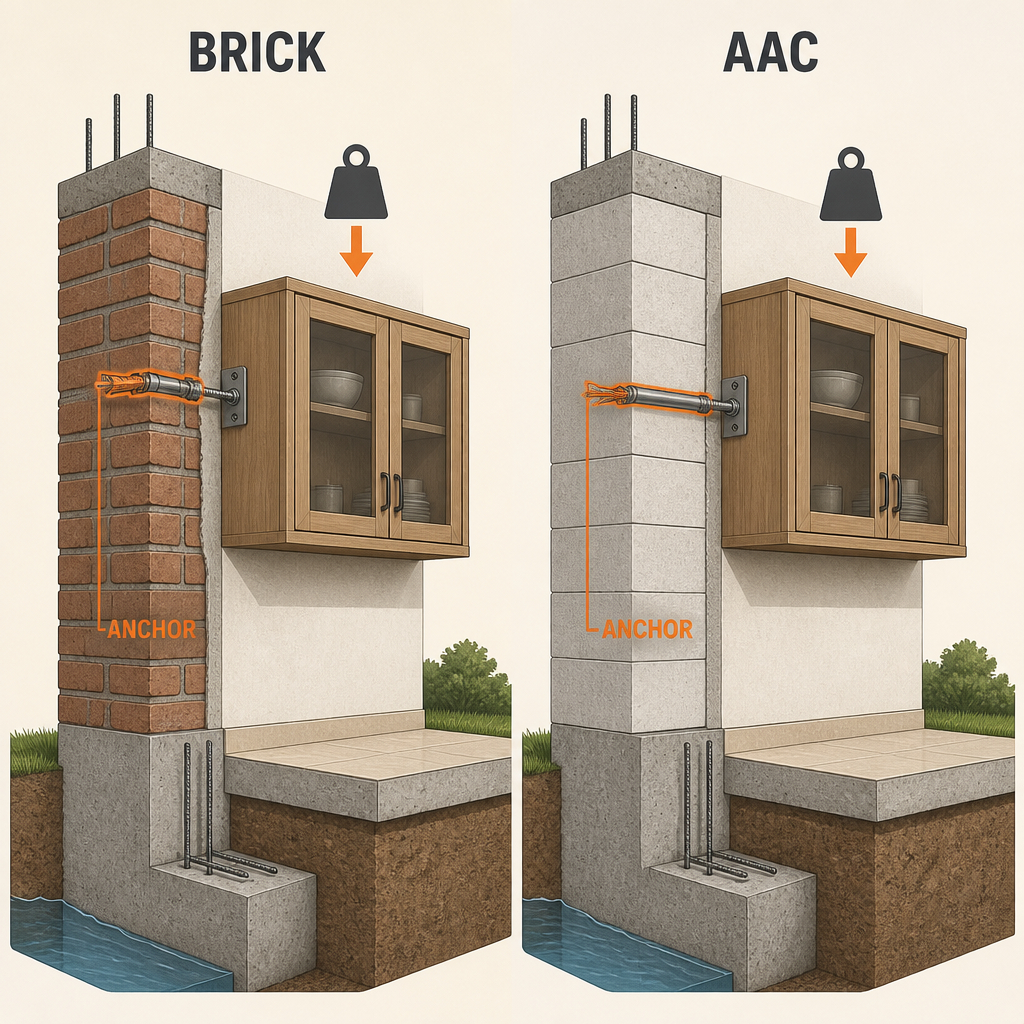
Which option is much lighter and is usually chosen partly for better thermal insulation?
Correct. AAC is much lighter and has stronger thermal-insulation performance than dense conventional masonry.
Apply the idea
Complete the decision to finish this scene.