Lesson 3.13
Railings, Gates & Fabrication
ch03-l13-img01 course image metal, metal-with-wood and glass railings can look different while all still require safe height, anchorage and edge protection.
Fabrication becomes architecture only after it works.
The visible finish is only the final layer of the decision.
01 The First Job Is Safety
A railing exists because there is an edge.
Stair.
Balcony.
Terrace.
Level difference.
So before deciding whether it is:
wood + metal
glass
ask:
Does it perform safely for the actual location?
Exact heights, openings and loading requirements should follow the applicable design/building requirements for the project.
The homeowner's mental model is simpler:
Safety first. Finish second.
02 Stainless-Steel Railing
Practical and low maintenance.
SS railings are popular because they can provide:
- corrosion resistance
- durability
- straightforward cleaning
- strong fabricated construction.
They can work extremely well for:
- stairs
- balconies
- terraces.
What matters
- grade appropriate to exposure
- welding/fabrication quality
- joint finishing
- anchoring
- proportions.
“Stainless steel” alone does not tell you whether the railing is well made.
03 Metal / Ss With Wooden Top
Add touch and warmth.
A wooden handrail can make a metal railing more comfortable and visually warmer.
It can improve:
- tactile feel
- interior character
- visual detailing.
But now two materials have to work together.
Metal.
Wood.
And wood introduces:
- finishing
- movement
- moisture sensitivity
- maintenance.
This can be excellent indoors where the detail is intentional.
04 Glass + Metal Railing
Make the barrier visually disappear.
Glass railings can:
- preserve views
- transmit light
- create a cleaner modern edge
- make stairs and balconies feel more open.
But the glass itself becomes a safety component.
So glass type, support, fixing and edge detailing matter enormously.
A glass railing is not ordinary window glass attached to a balcony.
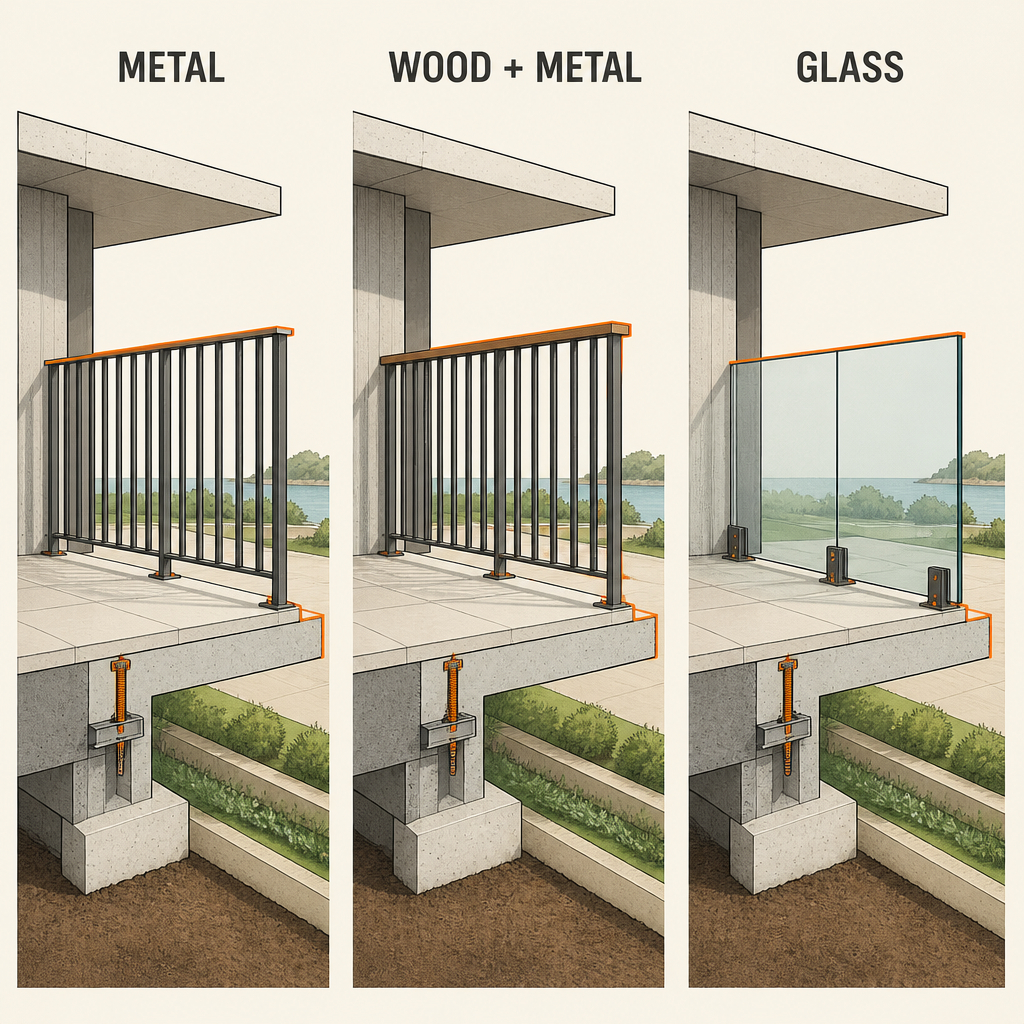
It is a safety system.
05 The Glass Trade-Off
What do you gain?
openness
light
view
What do you take on?
fingerprints
cleaning
specialised hardware
glass safety requirements
possibly more visible maintenance.
It is a legitimate architectural upgrade.
But it has a maintenance personality.
PART 2 · MAIN GATES
06 Ms Gate
Strong and straightforward.
Mild-steel gates offer:
- structural robustness
- design flexibility
- economical fabrication
- easy local repair.
But because the gate lives outside, corrosion protection is important.
The gate needs a complete protective finish system.
Not simply one coat of paint after welding.
07 Designer Ms + Hpl / Finish Panels
Keep the structure, change the appearance.
A metal frame can be combined with decorative panels such as HPL or other exterior-suitable finishes.
This allows:
- warmer appearance
- more privacy
- richer façade coordination.
But exterior decorative materials must actually be suitable for:
sun
rain
heat
movement
Exterior beauty has to survive exterior exposure.
08 Cnc / Laser-Cut Gates
Turn the gate into a statement element.
Computer-cut metal panels can create:
- patterns
- privacy screens
- customised designs
- complex geometry.
This can become a strong part of the elevation.
But intricate design can also mean:
- more edges
- more finishing
- more fabrication time
- more surfaces requiring protection.
Again:
Complexity should create a visual result worth maintaining.
09 Gate Weight Matters
A large metal gate can be very heavy.
That affects:
hinges
posts
foundation/support
rollers
motor
if automated.
So changing the gate design can change much more than the visible panel.
10 Automated Gates
Automation can be extremely useful where:
- the gate is heavy
- the driveway is frequently used
- getting out of the vehicle is inconvenient
- security control benefits.
But then you add:
- motor
- power
- controls
- sensors
- manual override
- servicing.
The gate must still be a good gate before it becomes an automatic gate.
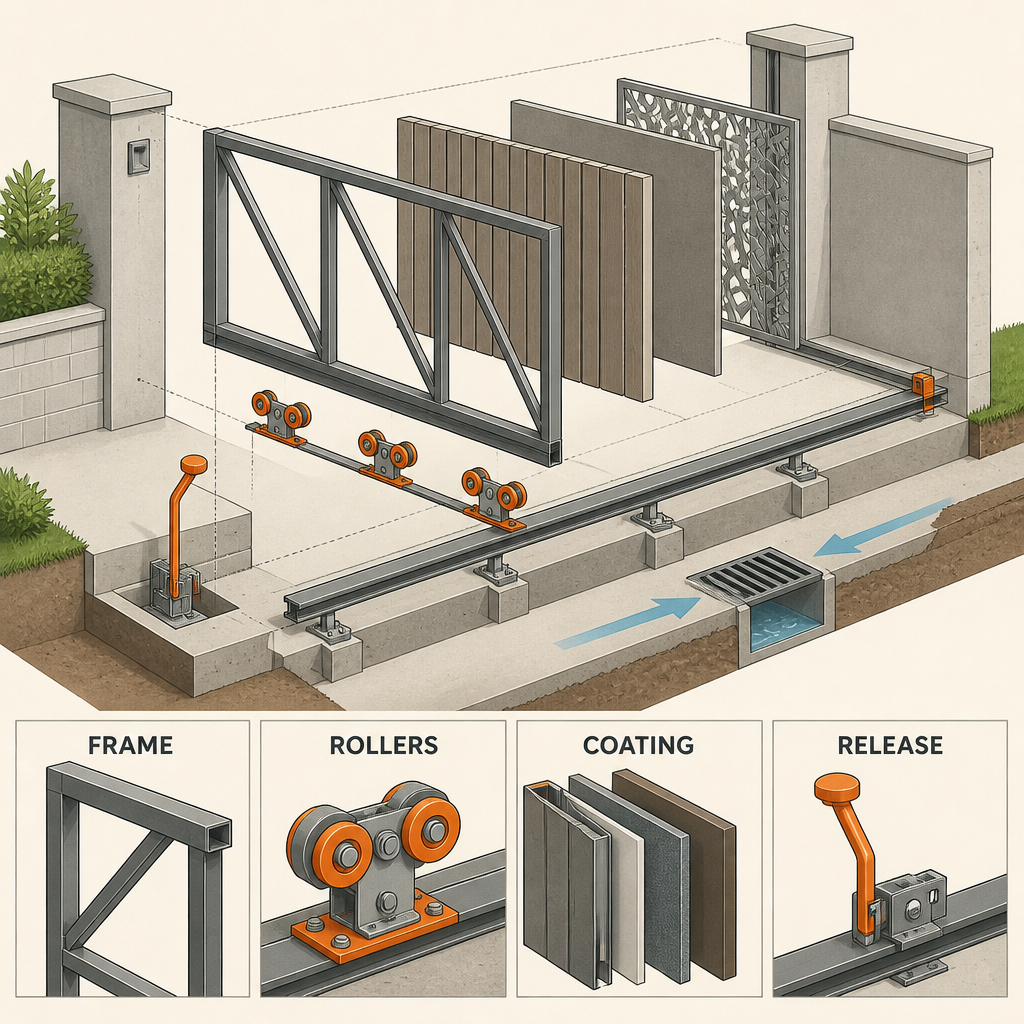
11 Corrosion Protection
Fabricated metalwork frequently lives in harsh conditions.
Rain.
Dust.
Sun.
Repeated wetting.
So protection might involve an appropriate system of:
surface preparation
primer
protective coating
paint / powder coating
depending on the material and fabrication strategy.
Poor preparation underneath a premium coating still creates problems.
12 Craft
CHECK ANCHORING
Railings and gates need real structural support.
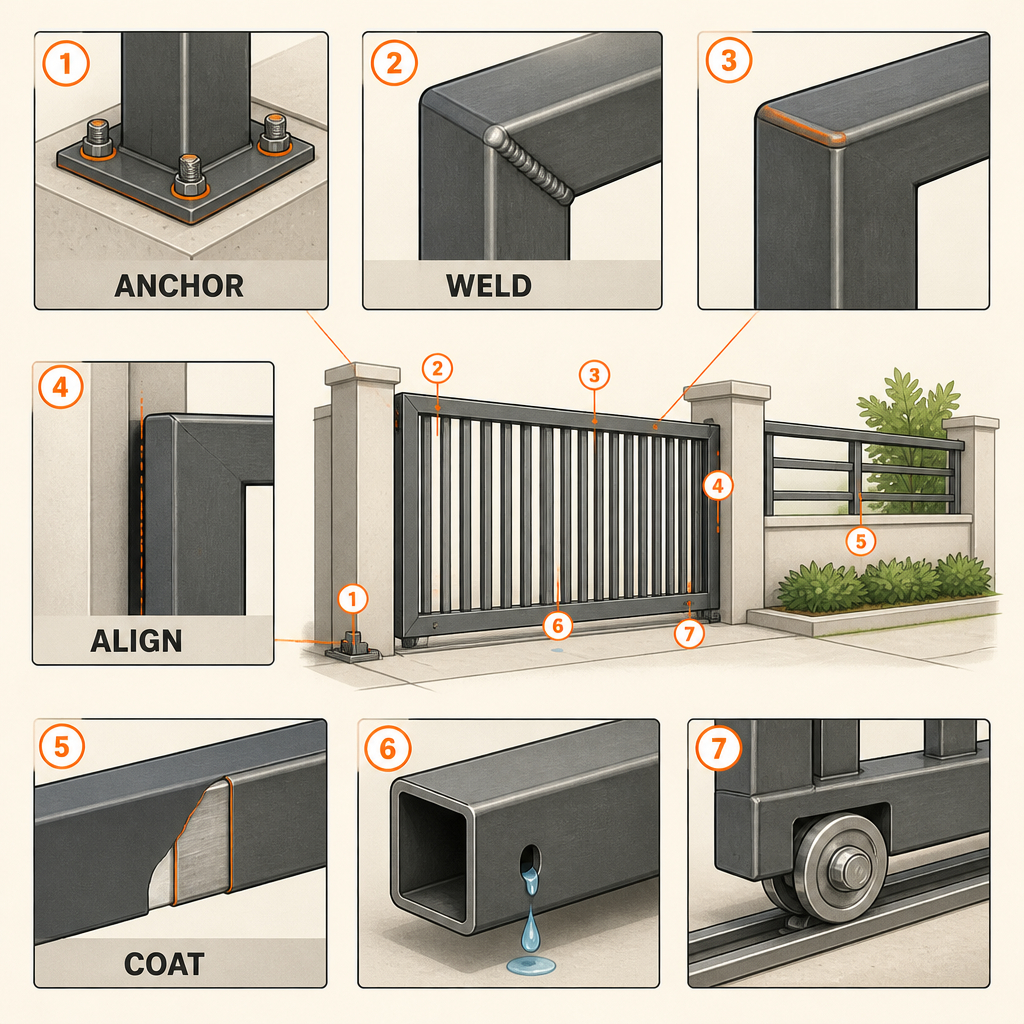
CHECK WELDS
Clean and properly executed.
CHECK EDGES
Especially where people touch them.
CHECK ALIGNMENT
Gates should move without fighting their own frame.
CHECK COATING
Corners and welds deserve attention.
CHECK DRAINAGE
Metal details should not unnecessarily trap water.
OPERATE EVERYTHING
Gate, latch, lock, motor and manual release.
13 Check Your Understanding
Choose the railing in the right order.
You are selecting a balcony railing. What should govern the decision first?
Safety + actual exposure
Most luxurious appearance
After safety and exposure are resolved, what comes next?
Choose material and appearance
Ignore fabrication details
Fabrication becomes architecture only after it works.
The visible finish only works when the construction beneath it has been resolved.
Apply the idea
Order fabrication decisions from essential to visible.
Complete the decision to finish this scene.
- Detail drainage, movement and durability
- Confirm safety and required dimensions
- Select the visible finish
- Coordinate structure and fixing points