Lesson 4.1
Understanding the Interior Scope
the room itself walls, floor, ceiling, windows, doors, electrical points and plumbing.
Before choosing furniture, understand what you are actually designing.
Construction creates the room. Interiors decide how that room is actually lived in.
01 Start Here
Construction gives you the room. Interiors make the room usable.
The room itself
Walls, floor, ceiling, windows, doors, electrical points and plumbing.
Built into the room
TV units, bed-back panels, vanities, built-in consoles and fixed storage.
Movable objects
Sofa, bed, chair, centre table and ottoman.
Comfort and personality
Curtains, rugs, cushions, lamps, artwork and accessories.
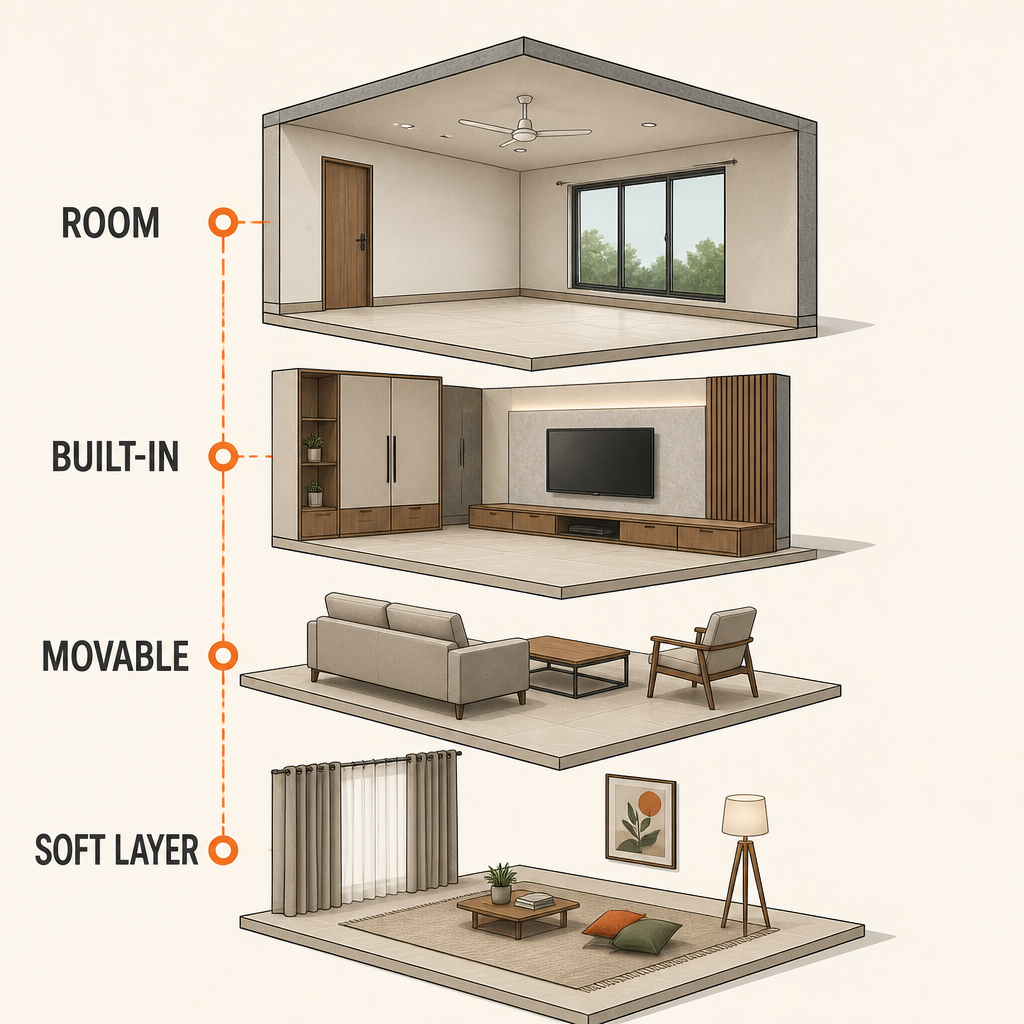
Each layer can improve the room. Each one should still have a purpose.
02 The Room Count Matters
More rooms means more repetition.
One bedroom may need a bed, side tables, curtains, lighting and a dresser. Four bedrooms repeat those decisions and their installation and maintenance.
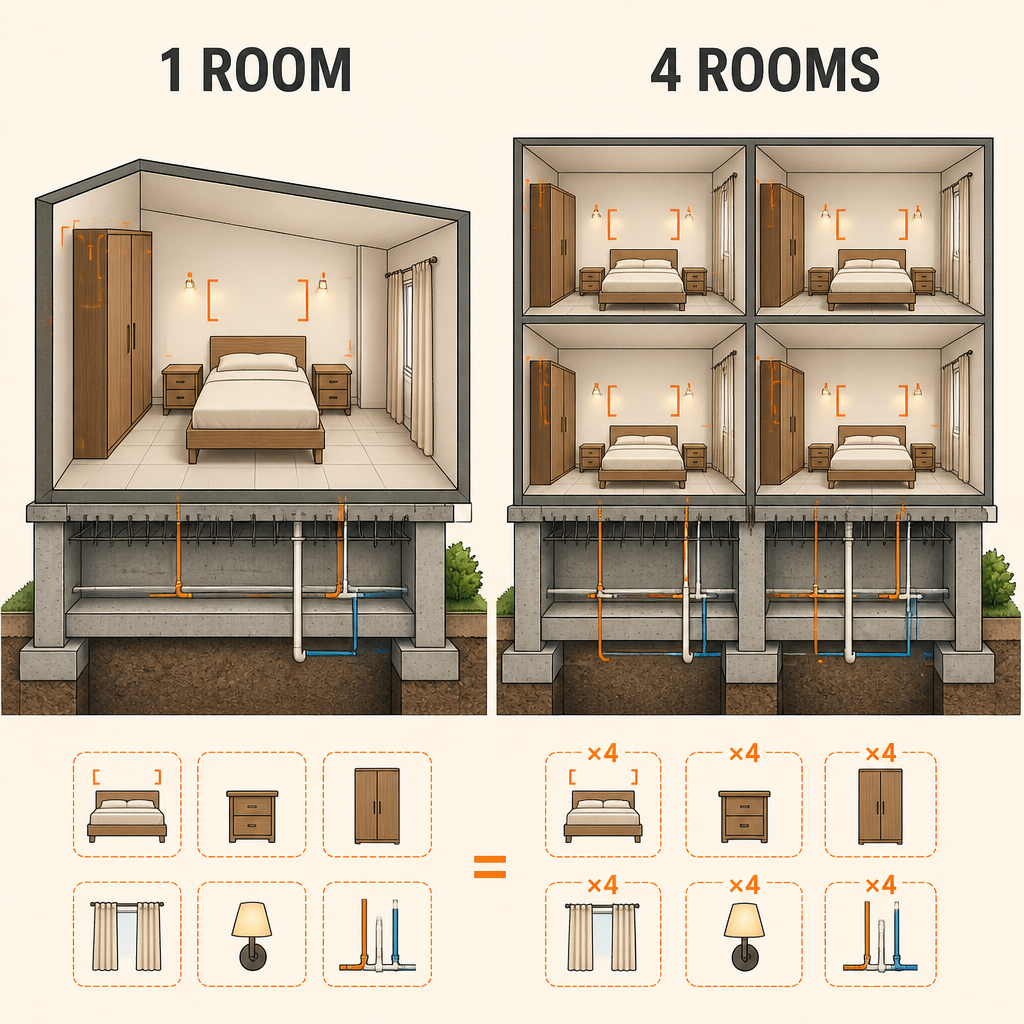
Which rooms are actually being completed now?
There is nothing wrong with finishing the house in stages.
03 The Illusion
A complete interior does not mean every possible item must be included.
Add every furniture category because it appears in styled interiors.
Choose only what helps the room support the way people use it.
What does this room need to support comfortably?
04 Function First
Every room has a primary job.
Living room
Bedroom
Bathroom
The interior starts with behaviour. Furniture supports it.
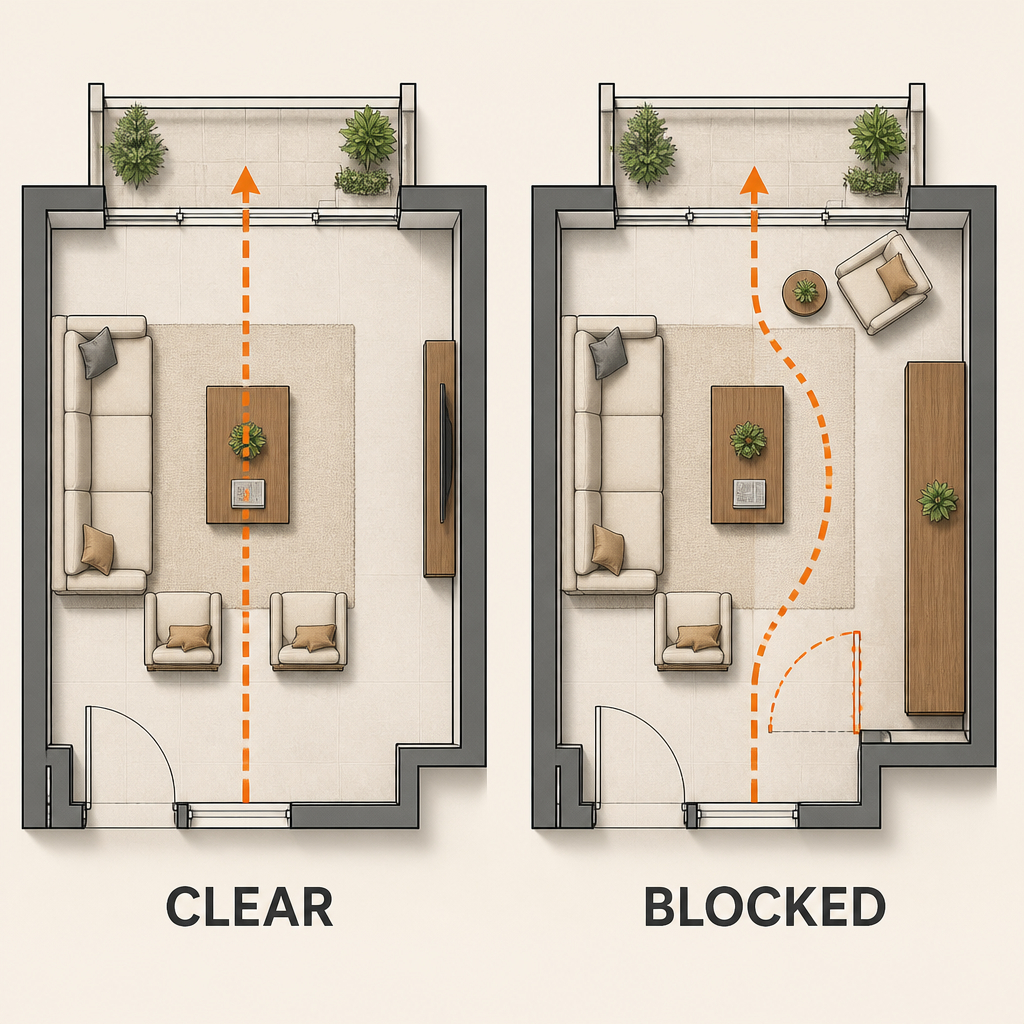
06 Empty Space Is Part of the Design
Furniture uses space. Good interiors preserve enough space to live around it.
- Walk comfortably
- Open drawers
- Pull a chair
- Open wardrobe shutters
- Move luggage and clean
Empty space is not wasted area.
07 The Better Sequence
Understand the room before decorating it.
Choose beautiful furniture
Understand room + movement + use
1
2
3
4+
08 Check Your Understanding
Does the extra furniture earn its place?
A bed, side tables, wardrobe and dresser already fit. Should a lounge chair be added simply because high-end bedrooms often have one?
Add it regardless
Add it only if useful
First complete the room. Then decorate the room.
Apply the idea
Separate the room shell from the interior layer.
Complete the decision to finish this scene.