Lesson 3.11
Windows & Glazing
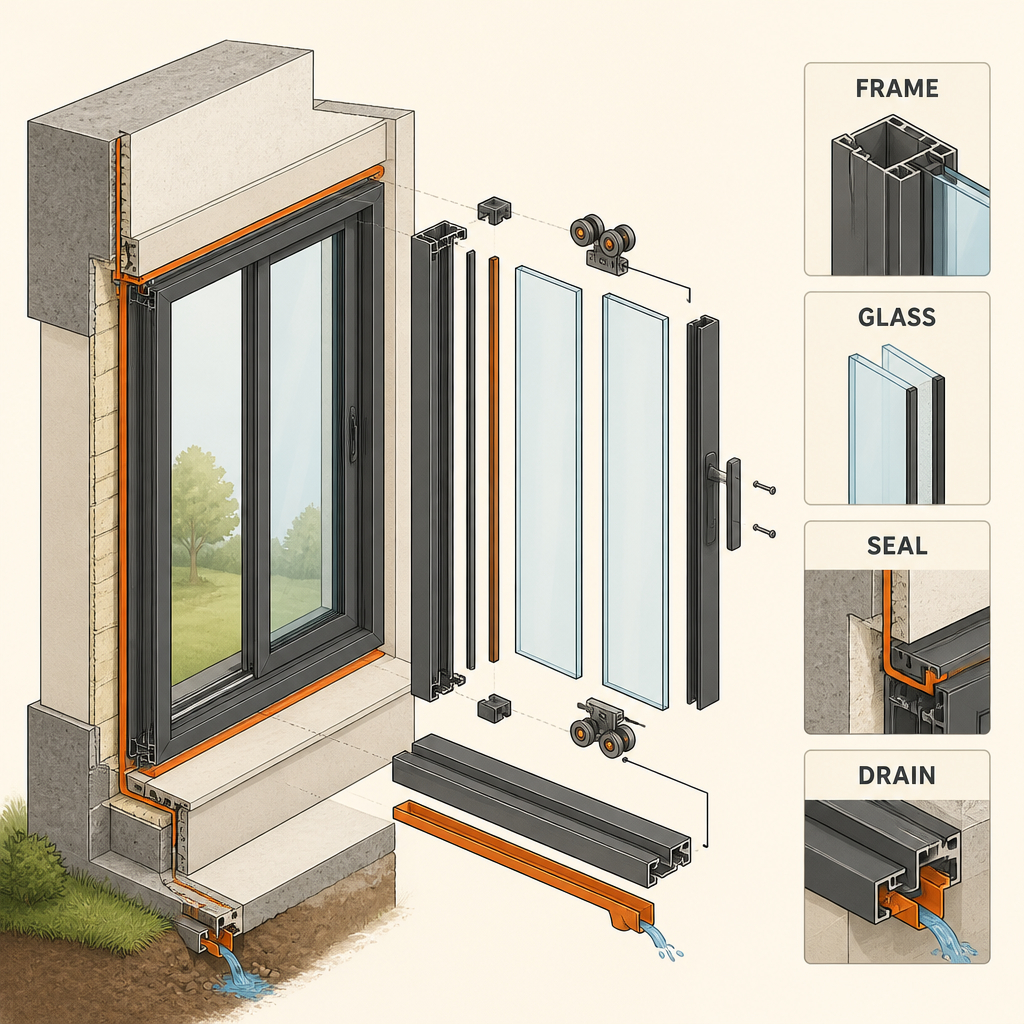
01 the window system think: frame - glass - gaskets / seals - hardware - installation - drainage = window performance leave one part out and the window can disappoint.
A window performs as an assembly.
The visible finish is only the final layer of the decision.
01 The Window System
Think:
FRAME
-
GLASS
-
GASKETS / SEALS
-
HARDWARE
-
INSTALLATION
-
DRAINAGE
=
Leave one part out and the window can disappoint.
02 White Upvc
Practical, insulated and low maintenance.
uPVC window systems are widely used because they can provide:
- low-maintenance frames
- good sealing when properly fabricated
- thermal performance
- practical everyday operation.
White is the familiar appearance.
What matters
A good frame profile still needs:
- correct reinforcement where required by the system
- appropriate glass
- quality hardware
- good gaskets
- proper installation.
uPVC is a system, not just white plastic.
03 Coloured Upvc
Change the appearance without changing the basic material family.
Coloured or laminated uPVC can provide:
- darker frame appearance
- wood-like finishes
- better coordination with interiors/façades.
The fundamental reason for selecting uPVC remains similar.
Most of the added value is visual.
So if you like white, white is not structurally inferior because another colour costs more.
04 Slim Aluminium Profiles
Reduce frame visibility and increase the visual role of glass.
Modern aluminium systems can create:
- slimmer sightlines
- larger-looking openings
- cleaner contemporary detailing
- strong profiles suitable for larger configurations depending on the system.
This can significantly change the architecture.
The window can begin to feel less like:
frame + glass
and more like:
large uninterrupted view.
05 The Slim-Frame Trade-Off
The slimmer and larger the glazed opening becomes, the more important the engineering becomes.
Think about:
- wind loads
- glass thickness/type
- frame system
- drainage
- sealing
- hardware
- installation.
A narrow-looking frame is not inherently better if the system behind it is inappropriate.
06 Glass Matters As Much As The Frame
Two identical-looking aluminium frames could contain very different glass.
Glass can affect:
- heat transfer
- glare
- safety
- sound
- privacy
- daylight.
Depending on the design, options may include different combinations of:
- clear glass
- toughened safety glass
- laminated glass
- insulated glazing
- performance coatings.
You do not need to memorise the product catalogue.
Remember:
Frame selection and glass selection are separate decisions.
07 Bigger Glass = More Light?
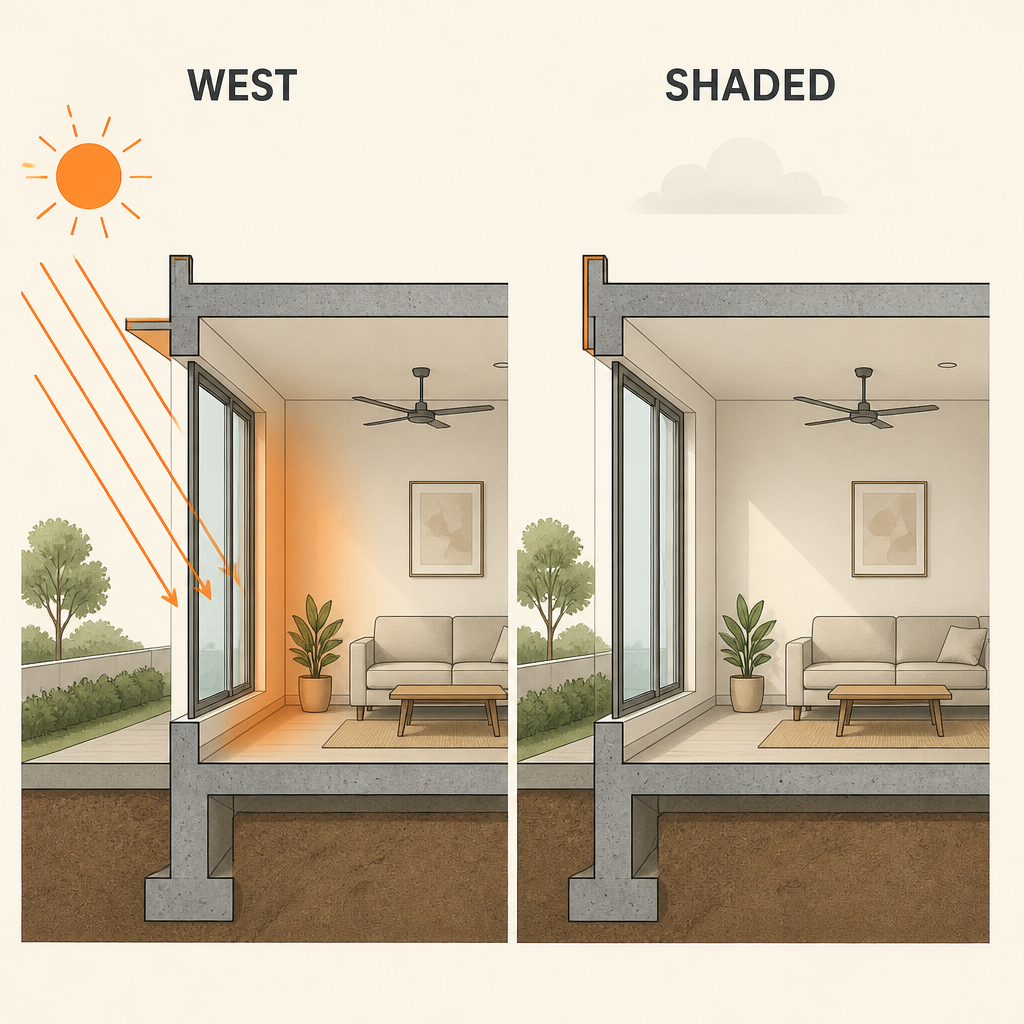
Usually more glazed area can admit more daylight.
But it can also admit:
more heat
more glare
depending on orientation and glass specification.
A large west-facing window can behave very differently from a shaded north-facing opening.
So:
What is this window facing?
Architecture matters.
08 Sound
A road-facing bedroom may care deeply about acoustic performance.
Sound reduction depends on more than simply saying:
“Use premium window.”
It can involve:
- glass configuration
- air tightness
- seals
- frame performance
- installation quality
- gaps around the window.
A tiny unsealed gap can undermine an otherwise sophisticated assembly.
09 Rain
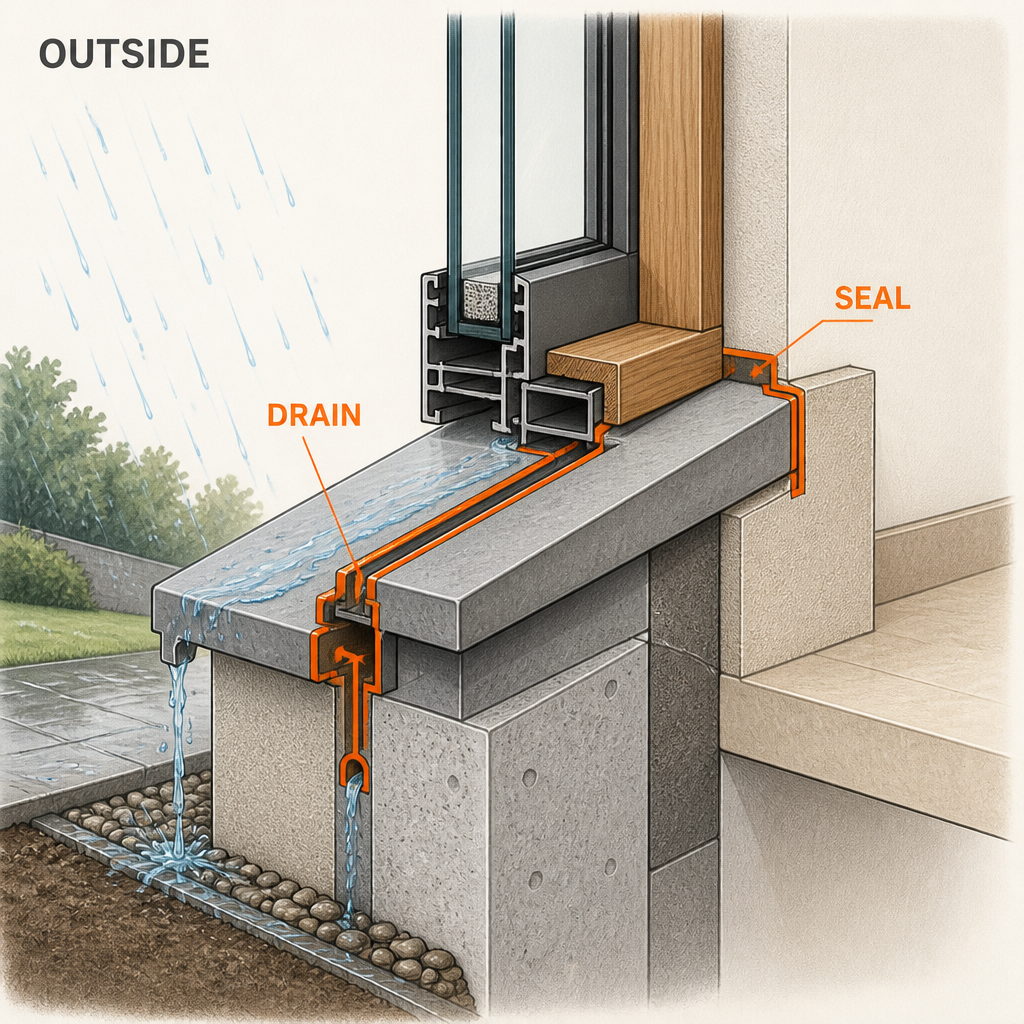
The window has to let daylight in without letting rain in.
Look at:
- external sealing
- drainage paths
- sill details
- frame joints
- installation gaps.
Again, a premium profile fitted poorly can leak.
The most expensive window still has to meet the wall correctly.
10 System
Windows connect to:
Opening dimensions.
Finished edges.
Tracks and pockets.
Curtain head details.
Heat load.
Opening movement.
External appearance.
External junctions.
One window decision can touch almost the whole room.
11 Craft
VERIFY OPENING SIZE
Before fabrication.
SELECT GLASS DELIBERATELY
Not as an afterthought.
CHECK OPERATION
Sliding/casement mechanisms should move smoothly.
CHECK SEALS
Continuous and properly fitted.
CHECK WATER DRAINAGE
Frame drainage should not be blocked.
TEST THE PERIMETER
Installation gaps need proper treatment.
12 Check Your Understanding
What makes the window perform?
A slim premium frame has been specified. Which other elements still affect rain, sound and overall window performance?
Glass
Gaskets / seals
Hardware
Installation
Drainage
Curtain colour
Check the assembly
A window performs as an assembly.
The visible finish only works when the construction beneath it has been resolved.
Apply the idea
Match the window component to its job.
Complete the decision to finish this scene.