Lesson 3.10
Doors & Door Quality
ch03-l10-img02 course image a straight, aligned, well-hinged simple door performs better than an attractive finish on a warped, scraping shutter.
The door should work beautifully before it looks beautiful.
The visible finish is only the final layer of the decision.
01 Start With The Job
A bedroom door needs:
- privacy
- smooth operation
- reasonable sound separation
- durability.
A bathroom door has additional moisture exposure.
An entrance door may need:
- greater security
- weather resistance
- stronger hardware.
So:
Not every door in the house needs the same construction or finish.
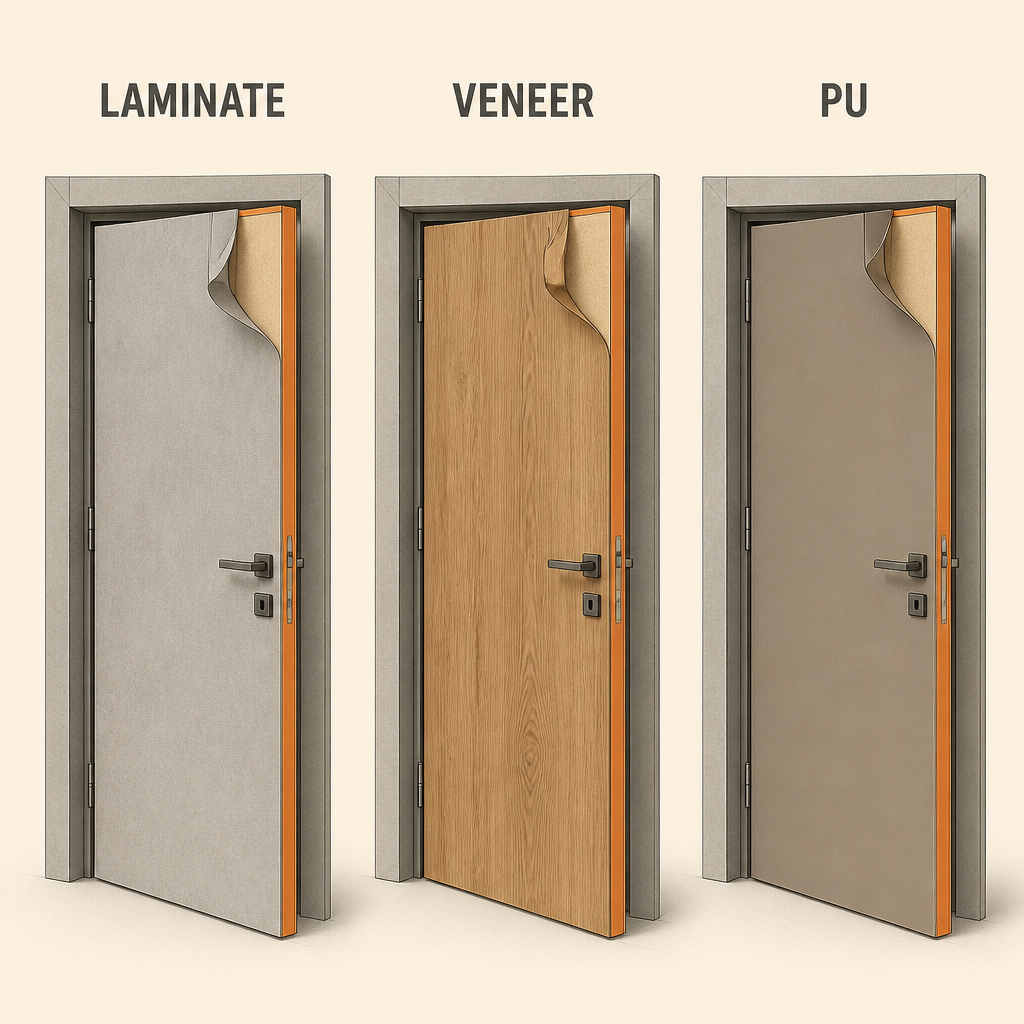
02 Laminated Doors
Practical and durable.
Laminate provides a factory-made decorative surface.
Advantages
- easy maintenance
- consistent appearance
- wide range of colours/patterns
- durable everyday surface
- generally economical.
For many internal doors, that makes excellent practical sense.
Trade-off
It usually has a more manufactured appearance compared with natural veneer or high-end painted finishes.
That is aesthetic.
Not necessarily functional inferiority.
03 Veneer Finish
Bring natural wood character to the surface.
Veneer is a thin layer of real wood applied over a suitable substrate.
Because it is real wood, you get:
grain
variation
warmth
natural character
Two doors may not look perfectly identical.
That is often the point.
What it requires
Veneer then needs an appropriate protective finish.
And because natural surfaces show craftsmanship clearly, poor edge detailing or polishing becomes visible.
04 Pu Finish
Create a smooth finished surface.
PU-coated doors can create a more seamless painted appearance.
Depending on the design, this can produce:
- smooth colour
- refined edges
- customised shades
- highly controlled visual finish.
It works especially well where doors are meant to become part of a clean architectural interior.
Trade-off
The finish is more workmanship-sensitive.
Future touch-ups may also need more care than simply replacing a laminate sheet.
05 The Illusion
“PU is luxury, so PU is the best door.”
That compares finish instead of the door.
Imagine:
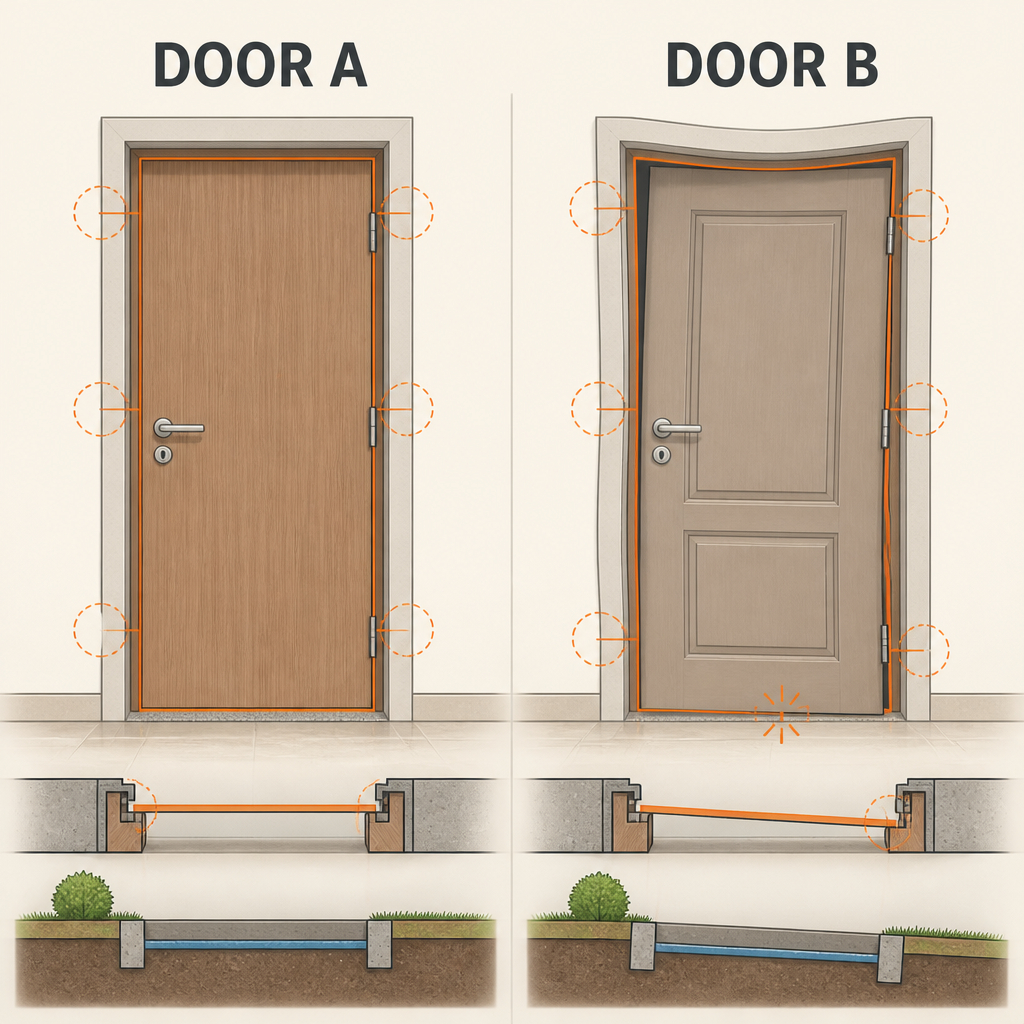
DOOR A
Simple laminate.
Good core.
Straight shutter.
Correct hinges.
Excellent alignment.
DOOR B
Beautiful PU finish.
Warped shutter.
Poor hinges.
Scrapes against floor.
Which is the better door?
Obviously A.
Finish affects appearance.
Construction affects whether the door works.
06 Hardware Matters
Hinges.
Locks.
Handles.
Stoppers.
Closers where required.
These small components determine how the door feels every single day.
A heavy door on inadequate hinges can sag.
A beautiful handle with a poor lockset becomes irritating.
The hardware should suit:
door weight
use
frequency
security
07 Bathroom Doors
Moisture changes the decision.
The door and frame near wet areas should be selected and detailed with that exposure in mind.
Pay attention to:
- bottom edges
- frame material
- ventilation
- water splash
- floor clearance.
Do not treat a frequently wet bathroom opening exactly like a dry bedroom opening without thinking about it.
08 Craft
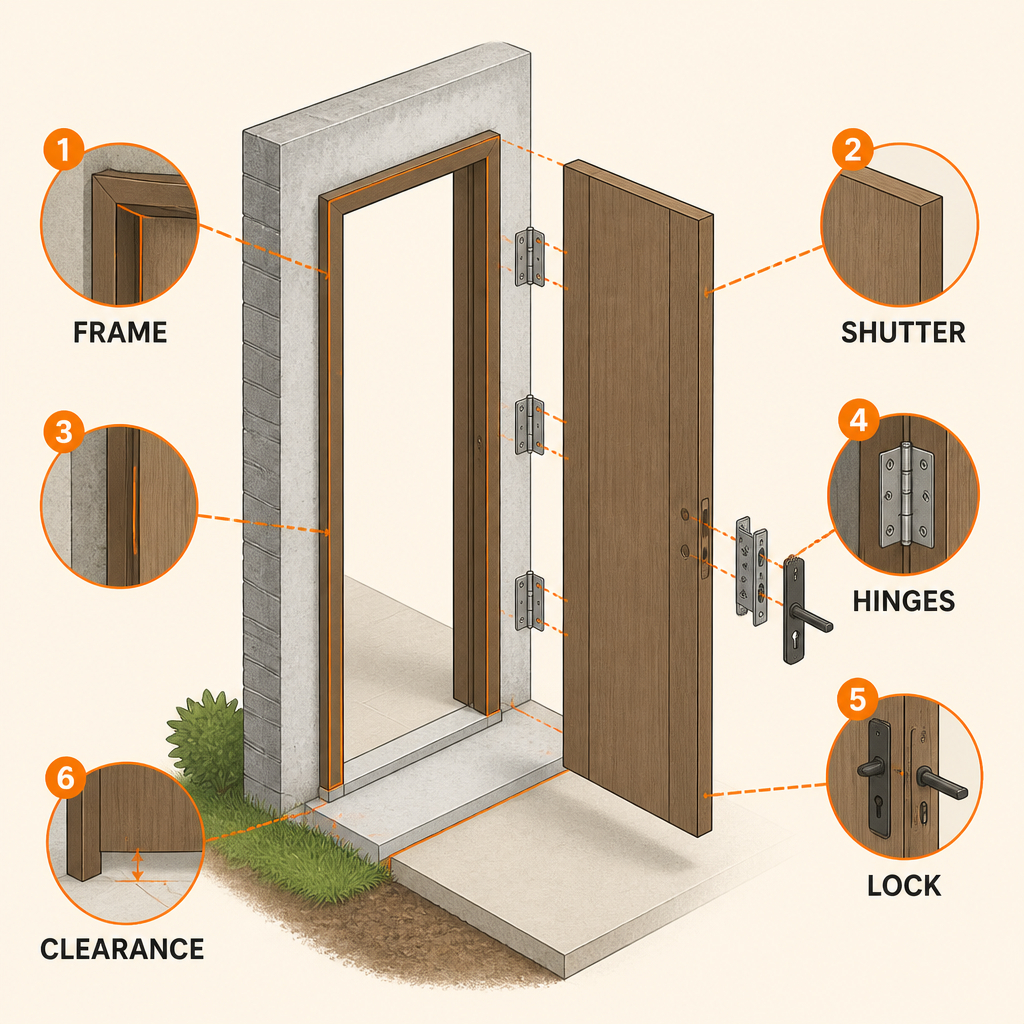
CHECK THE FRAME FIRST
It should be plumb and square.
CHECK THE SHUTTER
Straight and correctly sized.
CHECK CLEARANCES
Floor finishes matter.
CHECK HINGES
Appropriate for the shutter.
CHECK EDGES
Finish should continue cleanly.
OPERATE IT
Open and close every door before handover.
No scraping.
No unwanted movement.
No loose hardware.
09 Check Your Understanding
Judge the door, not only its surface.
Door A has simple laminate, a straight shutter, correct hinges and excellent alignment. Door B has beautiful PU but is warped and scrapes the floor. Which is the better door?
Door A
Door B
What should the finish decision come after?
Core + frame + hardware + alignment + location
Colour trend
The door should work beautifully before it looks beautiful.
The visible finish only works when the construction beneath it has been resolved.
Apply the idea
Classify each door requirement.
Complete the decision to finish this scene.