Lesson 3.9
Interior & Exterior Paint
ch03-l09-img02 course image recurring damp must be traced and repaired at its moisture source before the wall finish is restored.
Solve the building problem first.
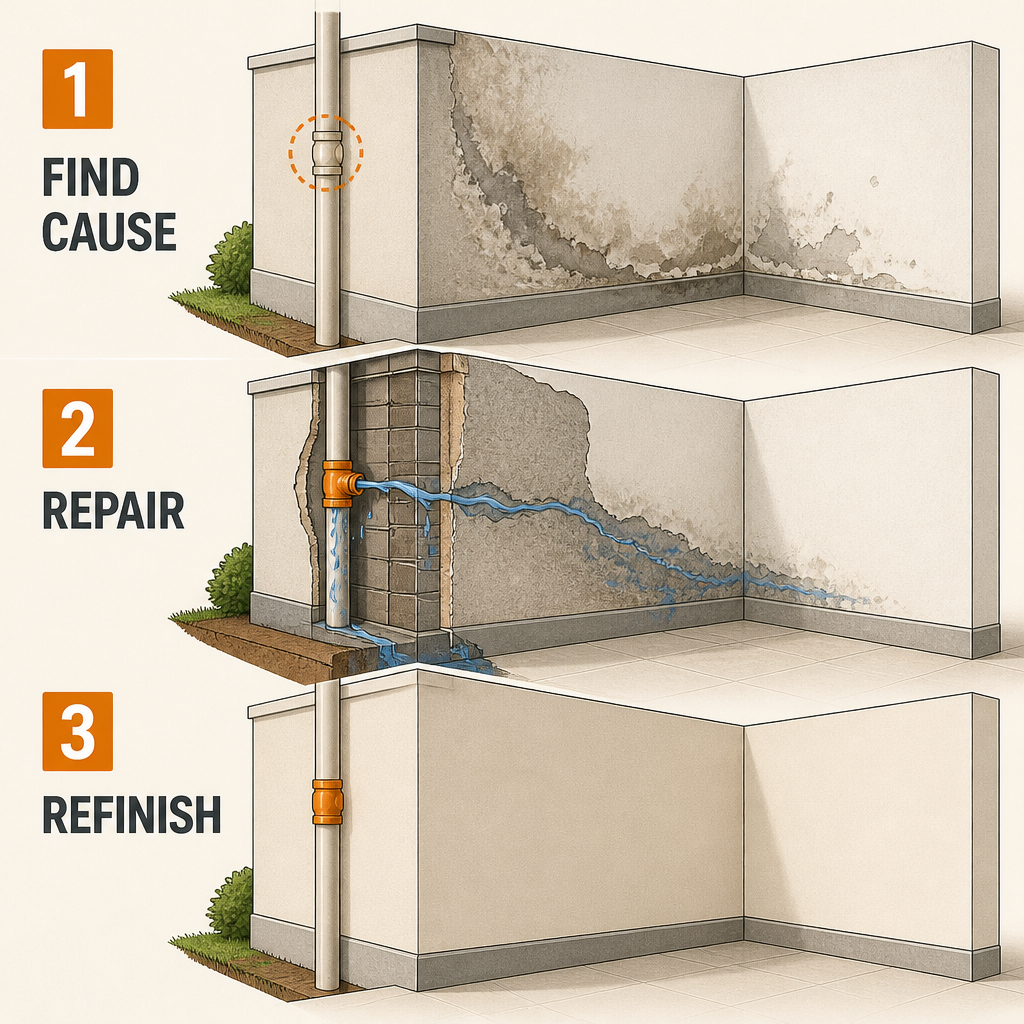
The visible finish is only the final layer of the decision.
01 Start With The Wall
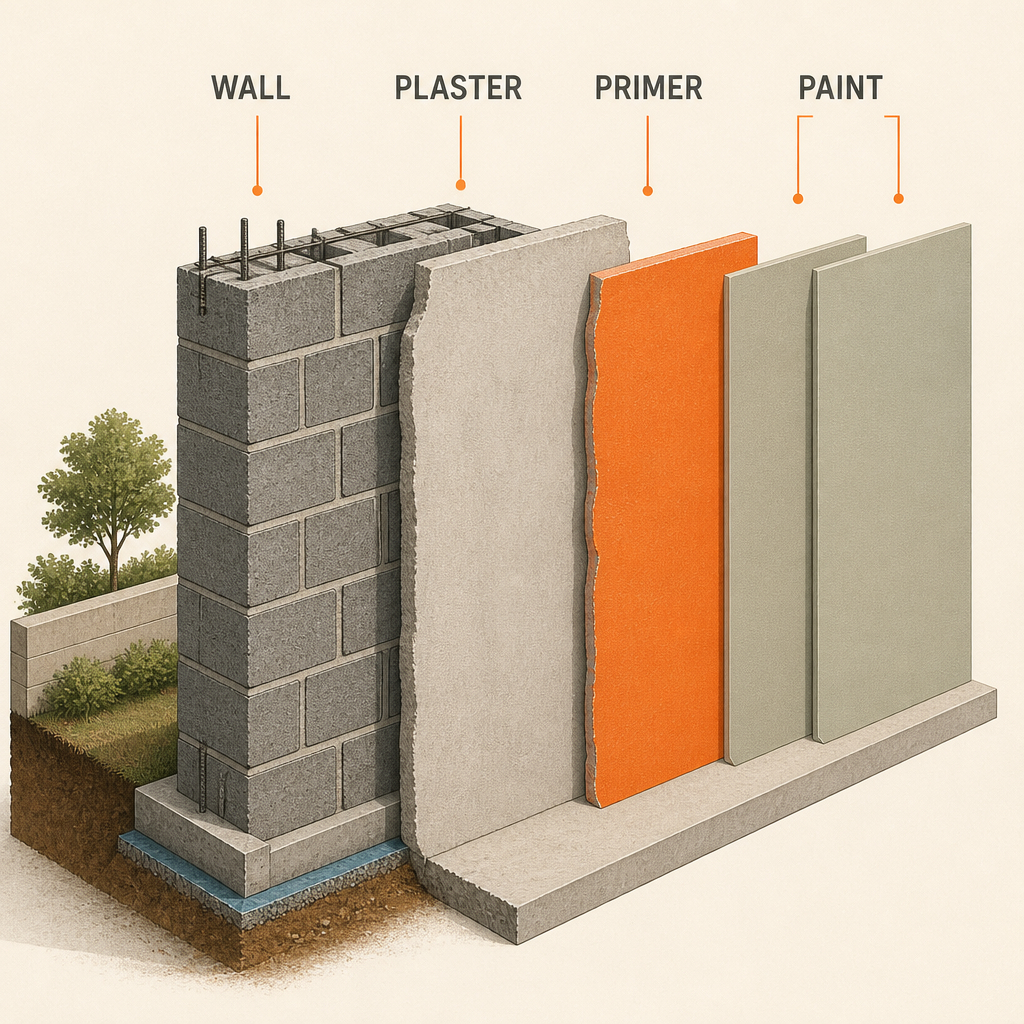
A simplified painted interior wall might involve:
WALL / PLASTER
↓
SURFACE PREPARATION
↓
PUTTY WHERE REQUIRED
↓
PRIMER
↓
The quality of the final layer depends on the layers underneath.
Paint does not make a bad wall flat.
INTERIOR PAINT
02 Basic Emulsion
A clean everyday finish.
A standard interior emulsion can provide:
- good colour
- clean appearance
- economical finishing
- straightforward future repainting.
This can work extremely well in:
- ceilings
- low-contact walls
- rental homes
- areas where easy future repainting matters.
The limitation is generally not that it looks “cheap.”
It is that higher-performance paints may offer better cleanability, stain resistance or finish quality.
03 Washable Emulsion
Useful where walls actually get touched.
Think:
passage
children's room
staircase
living room
around switches
Walls accumulate:
finger marks.
Dust.
Small stains.
A more washable finish can make maintenance easier.
That is a functional upgrade.
Washability is valuable where the wall gets dirty.
Not every ceiling needs the same performance.
04 High-End / Velvet / Luxury Finishes
Premium paints can offer:
- richer surface appearance
- smoother visual finish
- specialised sheen levels
- better tactile character
- advanced stain resistance depending on product.
They can work beautifully where walls form an important part of the interior.
But an expensive finish applied over:
bad plaster
or
poor putty
will still reveal the defects underneath.
Better paint makes a good wall look better.
It does not manufacture a good wall.
EXTERIOR PAINT
05 Outside Is A Different Job
The outside wall does not simply need to look nice.
It has to face:
rain
sun
dust
temperature changes
pollution
possibly algae/fungal growth depending on climate and exposure.
So exterior paint is also part of the building's protective skin.
06 Basic Exterior Finish
A basic exterior coating can provide:
- colour
- surface protection
- economical finish.
It may be entirely suitable where exposure is moderate and periodic repainting is acceptable.
07 Weather-Resistant System
A higher-performance exterior paint may improve resistance to:
- rain
- UV exposure
- colour fading
- biological growth
- repeated weather exposure,
depending on the actual coating system.
This can offer genuine long-term value on heavily exposed façades.
08 Advanced Weather-Shield Systems
At the higher end, exterior coatings may provide stronger combinations of:
- weather resistance
- surface flexibility
- dirt resistance
- protection
- longer maintenance cycles.
But again:
A premium exterior coating cannot compensate for:
active seepage
major cracks
poor plaster
failed parapet details
Paint protects the surface.
It does not repair the building behind the surface.
09 The Interior / Exterior Difference
Think:
INTERIOR PAINT
appearance + touch + cleaning
EXTERIOR PAINT
appearance + weather + protection
Those are different jobs.
Which means there is no reason they must follow the same specification philosophy.
10 Colour Changes Perception Too
Light colours can make spaces feel:
brighter
larger
calmer
Darker colours can create:
depth
contrast
focus
But colour should also be judged in the real light of the space.
A tiny colour chip under showroom lighting can look surprisingly different on a 12-foot wall beside daylight.
Test a meaningful patch before approving an important colour.
11 Craft
CHECK THE PLASTER
Flatness first.
FIND THE MOISTURE
Do not paint over unexplained dampness.
PREPARE THE SURFACE
Sanding and preparation determine finish quality.
USE THE RIGHT SYSTEM
Interior and exterior products perform different jobs.
APPROVE SAMPLE PATCHES
Especially strong colours and premium finishes.
PROTECT OTHER WORK
Paint should not become the final layer sprayed over every completed fitting.
12 Check Your Understanding
A wall has recurring dampness.
What should happen first?
Upgrade the paint
Find the moisture source
Solve the building problem first.
The visible finish only works when the construction beneath it has been resolved.
Apply the idea
Order a sound paint build-up.
Complete the decision to finish this scene.
- Apply compatible primer or putty where required
- Diagnose and repair the wall
- Apply and inspect finish coats
- Prepare the surface