Lesson 5.3
Snagging
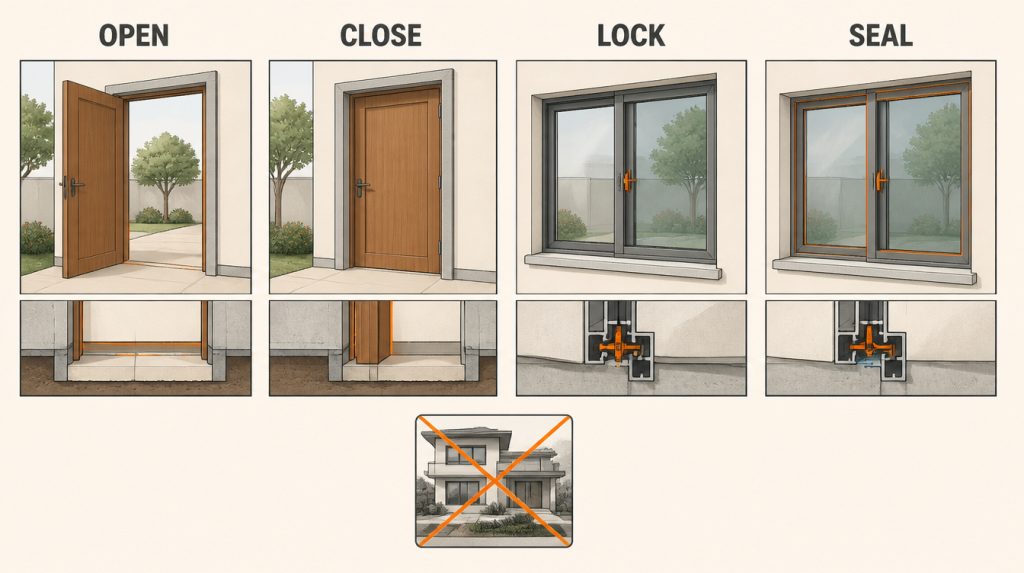
ch05-l03-img02 course image doors and windows must be opened, closed, locked and checked for alignment rather than judged only by appearance.
Handover is an operating test, not a photoshoot.
Know what was built. Know that it works. Keep the information needed to look after it.
01 What Is A Snag?
What Is A Snag?
A snag is something that still needs:
correction
completion
adjustment
or
repair
before final acceptance.
Examples:
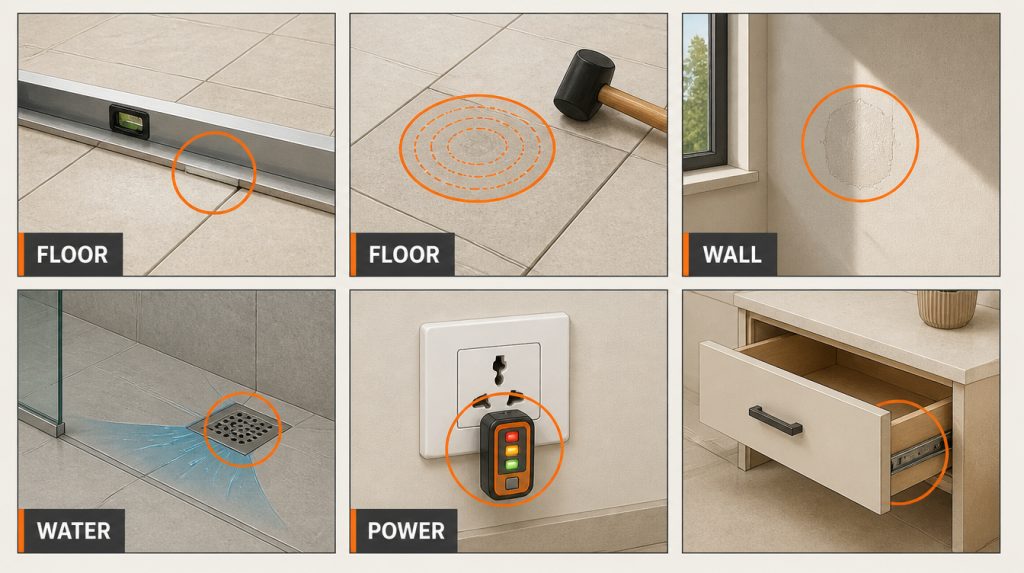
Door rubs against floor.
Socket does not work.
Paint patch is unfinished.
Drawer hits another shutter.
Shower water flows toward the door.
Window does not lock properly.
Each becomes a snag.
02 Go Room By Room
Go Room By Room
Do not try to remember everything.
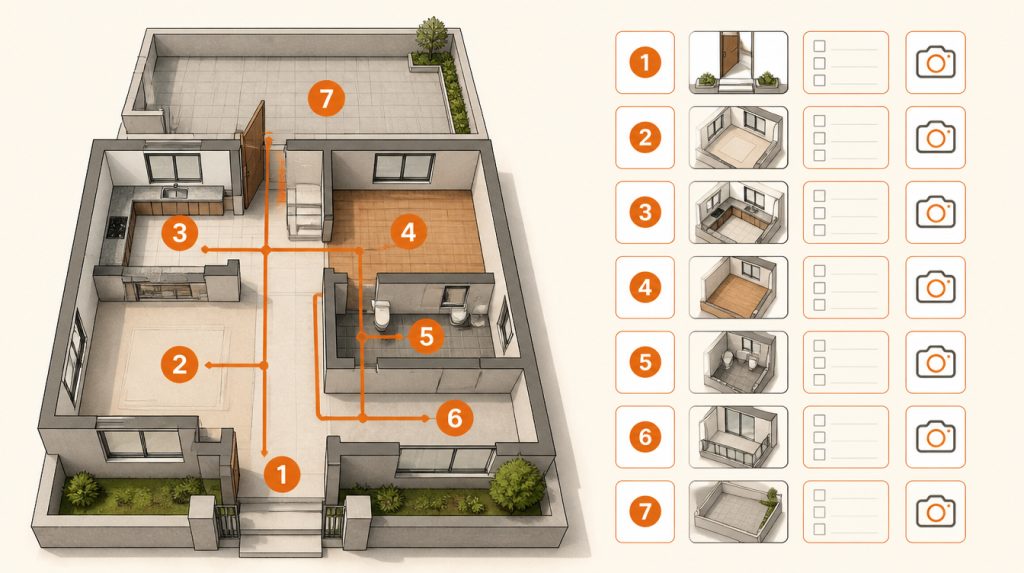
Use a systematic route.
For example:
GROUND FLOOR
Living.
Dining.
Kitchen.
Bedroom.
Bathroom.
Utility.
Then:
Bedroom 1.
Bedroom 2.
Bathrooms.
Balcony.
Terrace.
This prevents random inspection.
03 Doors
Doors
Operate every one.
Check:
- smooth opening
- smooth closing
- latch
- lock
- stopper
- hinge
- floor clearance
- alignment.
A door that only closes when slammed is not complete because it has beautiful veneer.
04 Windows
Windows
Open.
Close.
Lock.
Inspect:
- movement
- handles
- seals
- glass
- scratches
- frame damage
- drainage paths where relevant.
If possible, check water-sensitive windows during or after rain rather than relying only on appearance.
05 Flooring
Flooring
Look for:
- cracks
- chips
- stains
- uneven joints
- damaged skirting
- awkward cuts
- transitions
- loose or hollow-sounding areas where relevant to the installed system.
Wet areas deserve extra attention.
06 Walls & Ceilings
Walls & Ceilings
Look in normal light.
Then look with light falling across the wall where useful.
Check:
- paint consistency
- cracks
- unfinished patches
- damp marks
- poor edge work
- ceiling joints
- access panels.
Do not obsess over microscopic imperfections.
Look for things that affect the actual finished quality.
07 Bathrooms
Bathrooms
Use them.
Run:
- basin
- shower
- health faucet
- WC
- hot water.
Check:
- drainage
- leaks
- flow
- shower partition
- vanity drawers
- mirror
- exhaust
- accessories.
Pour or run enough water to see where the floor actually sends it.
08 Electrical
Electrical
Operate:
EVERY SWITCH
Test:
EVERY SOCKET
Check:
- lights
- fans
- regulators
- dimmers
- USB points
- automation
- major appliance points where installed.
Also check whether the distribution board is clearly identified.
You should not have ten anonymous breakers and no idea what they control.
09 Joinery
Joinery
Open every:
drawer
wardrobe
cabinet
kitchen shutter
Look for:
- rubbing
- loose hinges
- alignment
- damaged laminate/finish
- hardware operation
- soft-close function where included
- unfinished edges.
If it moves, move it.
10 The Snag List
The Snag List
Or:
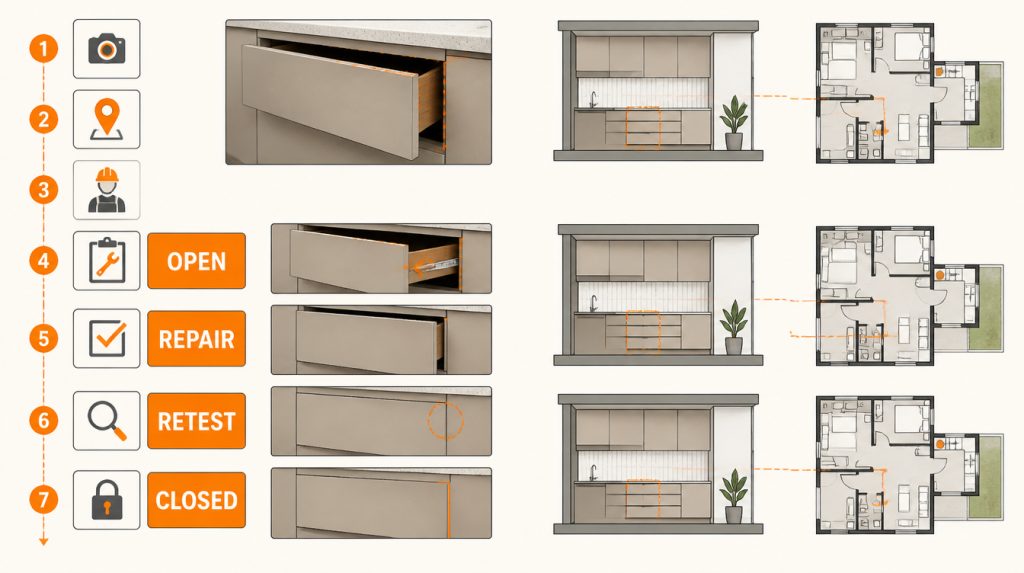
Bedroom 2 – wardrobe left shutter – rubbing against lower drawer.
Include:
- room
- exact location
- problem
- photo
- date.
That gives the contractor something precise to close.
11 Open Vs Closed
Open Vs Closed
Every snag should eventually become:
OPEN
or
Do not delete completed items.
Mark them closed.
That leaves a record.
12 Check Your Understanding
Snagging is an operating test.
A drawer looks perfectly aligned. What should you do?
Assume it works
Open and close it
Handover is an operating test, not a photoshoot.
Ownership begins when the project information, controls and maintenance knowledge become yours.
Apply the idea
Close a snag properly.
Complete the decision to finish this scene.
- Assign and correct it
- Record room and exact location
- Retest, verify and mark closed
- Describe and photograph the fault