Lesson 3.6
Plumbing, Water Pressure & Hot Water
water has to reach the right place, at the right temperature, with the right pressure.
Water has to reach the right place, at the right temperature, with the right pressure.
You turn on a tap.
Water appears.
That simple moment depends on an entire hidden system.
tank
pump / gravity
pipes
valves
heater
fixture
A good plumbing system is not just about buying an expensive pipe.
Everything has to work together.
01 START WITH THE PIPE
Start With The Pipe
Common residential water-supply systems may use materials such as:
and in some projects
PEX or other engineered systems.
The important thing is not which name sounds more premium.
Ask:
- what is flowing through it?
- hot or cold water?
- at what pressure?
- how are joints made?
- how accessible are those joints?
- is the installation team familiar with the system?
02 CPVC
A common practical plumbing system.
A common practical plumbing system.
What changes beyond the visible finish?
The construction, coordination, maintenance and use still matter.
A common practical plumbing system.
CPVC is widely used for hot and cold water distribution in homes.
Advantages
- familiar to many installers;
- straightforward system;
- suitable for typical residential applications when correctly designed and installed;
- widely available components.
What matters
Joints.
Supports.
Routing.
Installation.
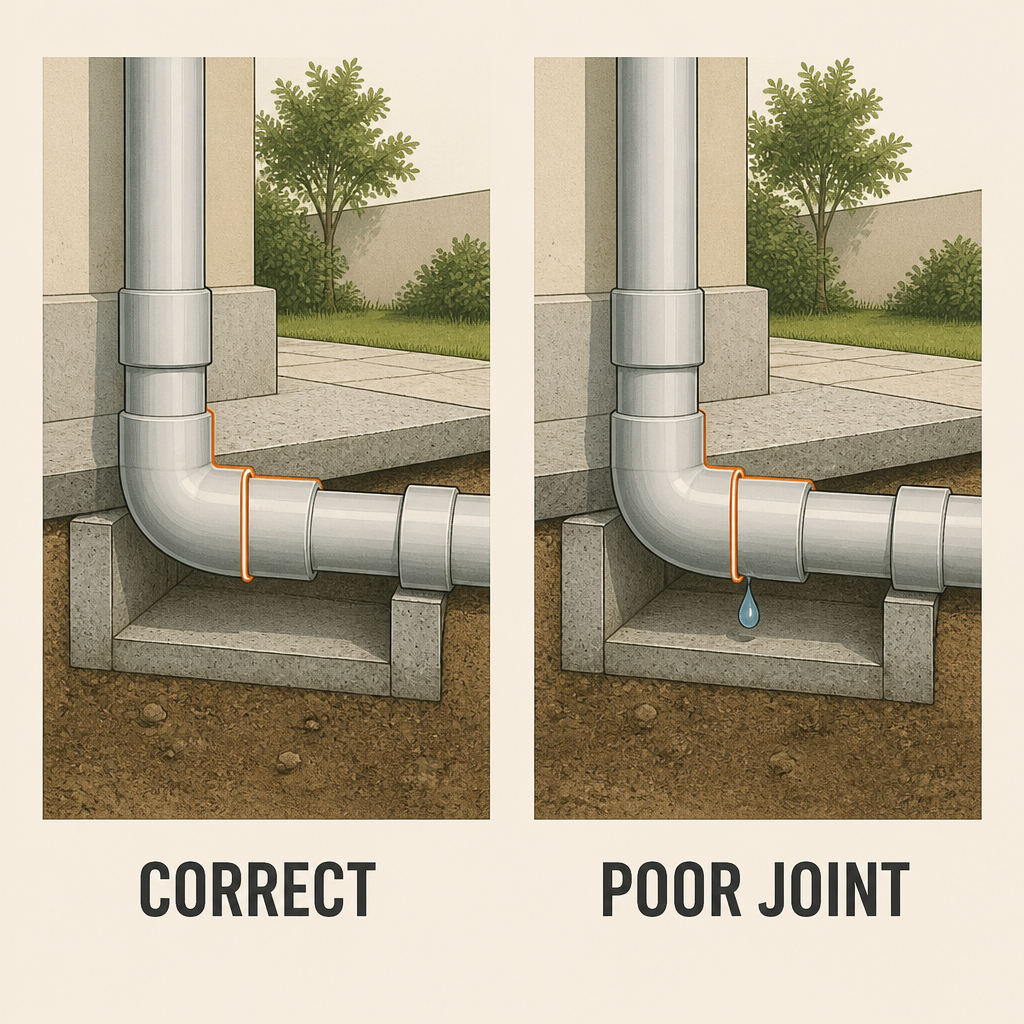
A premium pipe joined badly can still leak.
HighlightPipes usually fail at systems and connections, not because the logo was insufficiently expensive.
Compatible fittings, correct jointing and skilled installation matter as much as the pipe material itself.
03 BRANDED SYSTEMS
Branded Systems
Performance depends on how the choice fits the room, system and workmanship.
Moving to a better-supported pipe-and-fitting system can provide:
- consistent fittings;
- better system compatibility;
- manufacturer support;
- greater confidence in components.
But mixing random components can defeat that advantage.
Ideally, think of plumbing as:
pipe + fittings + jointing method + installer
not simply:
pipe.
04 PEX / HIGHER-GRADE SYSTEMS
NOW PRESSURE
Flexible systems such as PEX can allow different routing strategies and potentially fewer concealed joints in appropriate designs.
That can be very useful.
But it requires:
- compatible fittings;
- correct tools;
- trained installers;
- deliberate system design.
Key lineA sophisticated plumbing system installed by someone who does not understand it is not an upgrade.
NOW PRESSURE
05 GRAVITY
Let height create the pressure.
The upgrade solves a real functional or comfort requirement.
More specification is not automatically more value.
Let height create the pressure.
In a gravity system, water stored above the outlet uses elevation to provide pressure.
Advantages
- simple;
- quiet;
- low equipment dependence;
- comparatively low maintenance.
Limitation
Pressure depends significantly on height difference and system layout.
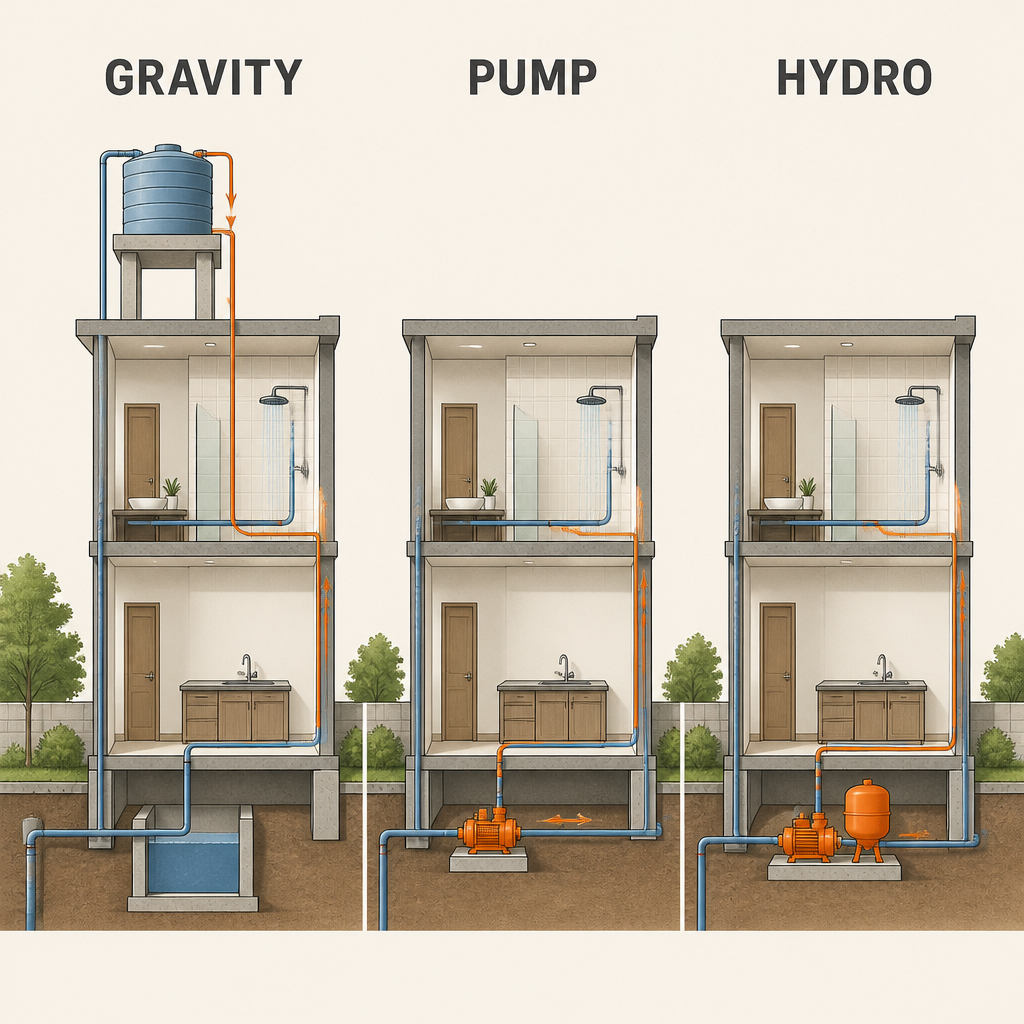
Upper floors or demanding fittings may not always get the experience you expect.
06 PRESSURE PUMP
Add mechanical assistance.
Add mechanical assistance.
What changes beyond the visible finish?
The construction, coordination, maintenance and use still matter.
Add mechanical assistance.
A pump can boost the water pressure.
This may help where gravity alone is inadequate.
What you gain
- stronger usable pressure;
- improved performance at selected outlets.
What changes
Now the system also includes:
- pump;
- electrical consumption;
- controls;
- noise;
- servicing.
HighlightMore pressure requires more system.
07 HYDROPNEUMATIC SYSTEM
Try to keep pressure more consistent.
A hydropneumatic system can provide more controlled pressure across multiple outlets.
This becomes particularly useful in larger homes where several bathrooms or fixtures may operate at the same time.
But complexity increases.
Equipment.
Pressure vessels.
Controls.
Maintenance.
Commissioning.
So again:
larger system ≠ automatically better system.
08 THE ILLUSION
“More pressure always makes a better shower.”
Not necessarily.
Fittings and pipes are designed for particular operating conditions.
Excessive or poorly controlled pressure can create:
- noise;
- unnecessary stress;
- uncomfortable flow;
- higher water consumption.
The goal is not maximum pressure.
The goal is appropriate and consistent pressure.
NOW HOT WATER
09 INDIVIDUAL GEYSERS
Heat water close to where it is used.
Understand the term, then judge the system.
Heat water close to where it is used.
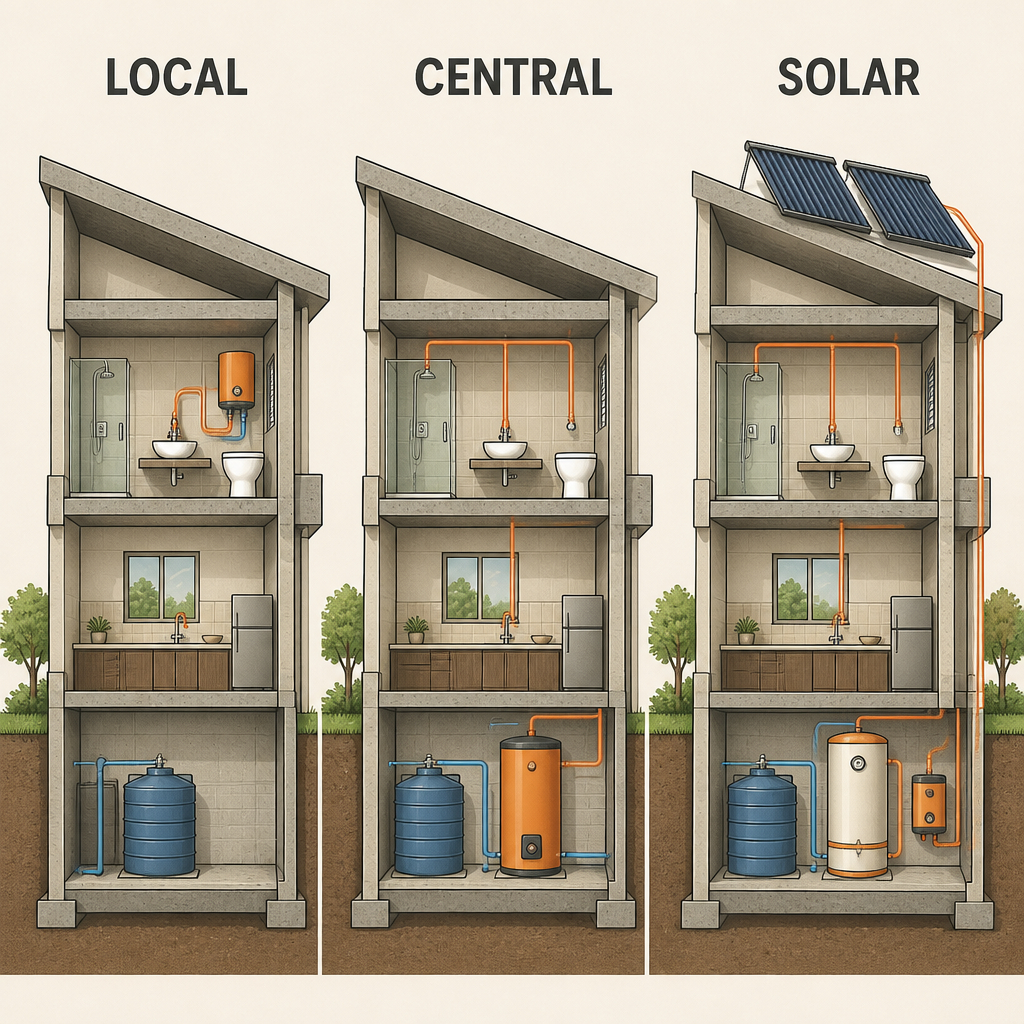
A local geyser serves an individual bathroom or area.
Advantages
- simple;
- relatively independent;
- short hot-water run when positioned nearby;
- easy to isolate.
Trade-off
Multiple bathrooms may mean multiple units.
Each needs:
- space;
- electrical provision;
- maintenance.
10 CENTRALISED HOT WATER
Centralised Hot Water
Performance depends on how the choice fits the room, system and workmanship.
One larger system serves multiple outlets.
Advantages
- centralised heating;
- fewer individual heaters;
- can serve several spaces.
What matters
Distance.
If hot water travels a very long pipe before reaching the bathroom, you may wait.
And while waiting:
water is flowing down the drain.
Long hot-water runs can also lose heat.
So a central system requires good distribution planning.
11 SOLAR HOT WATER
Solar is an energy decision, not simply a luxury label.
The upgrade solves a real functional or comfort requirement.
More specification is not automatically more value.
Solar is an energy decision, not simply a luxury label.
Solar hot-water systems use solar energy to contribute to water heating.
That can reduce conventional energy demand when:
- roof conditions are suitable;
- climate supports it;
- household demand justifies the system.
But it still requires planning for:
- storage;
- backup heating;
- piping;
- roof equipment;
- maintenance.
HighlightSolar is valuable because of how it produces energy, not because it sounds premium.
12 THE WHOLE WATER SYSTEM
Water performance comes from matching the whole chain.
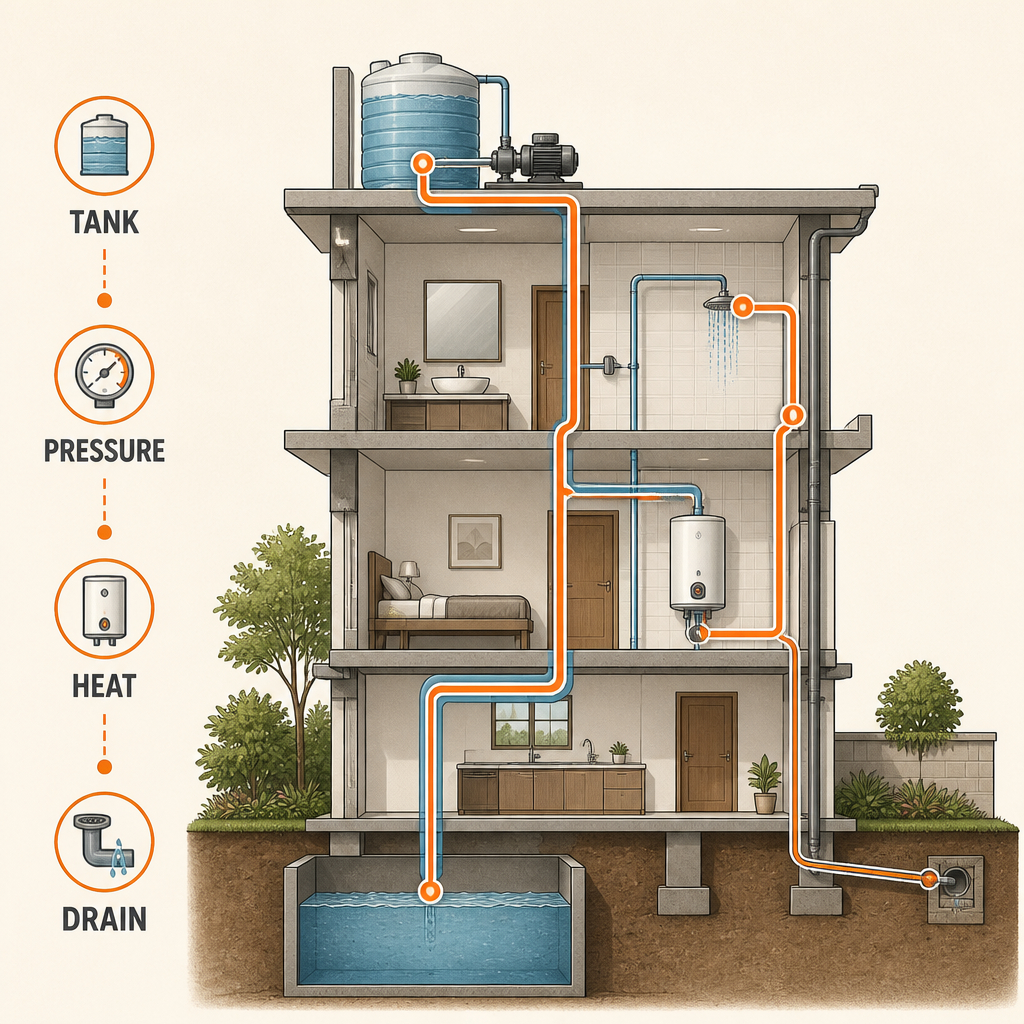
Think:
If you buy a large rain shower but the pressure is insufficient, the shower cannot create its intended experience.
If you buy a huge pump but the system does not need it, complexity rises unnecessarily.
If you install an expensive pipe system poorly, the price does not prevent leaks.
Key lineWater performance comes from matching the whole chain.
13 CRAFT
Craft
Function
Fit
Coordination
Maintenance
Before walls close:
Find leaks now.
Know where concealed pipes run.
Other trades can damage them.
Know where heaters and lines go.
Pumps and valves will eventually need attention.
Do not turn a system into random parts.
14 CHECK YOUR UNDERSTANDING
Solve the water problem you actually have.
One upper-floor shower has weak pressure. What should happen first?
Install the largest pump
Diagnose the system
Which parts may need investigation before selecting a pressure solution?
Check diagnosis
Solve the water problem you actually have.
Apply the idea
Trace the water system in operating order.
Complete the decision to finish this scene.
- Pipes and isolation valves
- Source or storage
- Heater and fixtures
- Pump or gravity distribution